As Generative AI technology continues to evolve at an unprecedented pace, enterprise AI adoption is undergoing a critical paradigm shift. We are moving beyond the era of chatbots that simply respond to user prompts and entering the age of AI Agents—systems capable of independently planning tasks, invoking tools, and directly executing system commands.
While this technological revolution offers tremendous productivity gains, it also introduces entirely new cybercybersecurity blind spots. Without proper governance, once AI Agents begin acting as “autonomous operators” on enterprise endpoints, traditional endpoint cybersecurity mechanisms face unprecedented challenges.
1. Three Common Enterprise AI Agents and Their Endpoint Cybersecurity Risks
According to statistics from the TeamT5 support service team, the following three AI Agents are among the most commonly observed on enterprise endpoints. Understanding their characteristics can help organizations identify potential cybersecurity vulnerabilities.
1. OpenAI Codex: A New Blind Spot in Software Supply Chain cybersecurity
- Positioning: Codex is deeply integrated into developers’ IDEs (Integrated Development Environments). It can autonomously analyze project context and automatically complete or modify code.
- Risk: In addition to the possibility of source code being passively uploaded during project analysis, credential-related vulnerabilities disclosed in early 2026 demonstrated that if Codex is compromised through privilege escalation, attackers may be able to move laterally into an organization’s software hosting platforms. This could allow them to implant malicious backdoors directly into source code repositories, threatening the cybersecurity of the entire software supply chain.
2. Claude: A Major Source of “Shadow AI” in Reasoning and Analytical Workflows
- Positioning: With its strong logical reasoning capabilities, long-context processing, and safety alignment, Claude is frequently used as a core tool in enterprise automation workflows.
- Risk: It is also one of the AI tools most commonly used by employees outside formal governance processes to handle confidential documents, making it a major source of “Shadow AI.” When granted access to internal corporate APIs or email systems, Claude may become vulnerable to Prompt Injection attacks, potentially causing sensitive internal information to be unintentionally transmitted to external users.
3. Cline (Claude Dev): The Endpoint “Autonomous Operator” and a Blind Spot in Behavioral Monitoring
- Positioning: Cline is a highly popular autonomous AI coding agent among developers. Integrated directly into IDEs such as VS Code, it can independently plan task steps, read and write local files, execute terminal commands on endpoints, and even launch browsers to perform application testing.
- Risk: Cline is granted a high degree of autonomous control. Its system activities—such as reading or writing files and executing commands—appear indistinguishable from normal VS Code development behavior under traditional process-level monitoring. If Cline is manipulated through malicious prompts, it may execute unintended code, potentially resulting in remote code execution (RCE) or the deletion of critical files.
2. How to Identify AI Agents in Your Environment
As enterprises face emerging endpoint cybersecurity threats in the AI era, they need appropriate tools to understand how AI Agents are being used across their environments.
1. ThreatSonar’s Approach to AI Discovery
Through ThreatSonar’s Threat Hunting interface, cybercybersecurity teams can identify relevant endpoint activity without disrupting endpoint operations. EDR-based real-time detection and scheduled scanning collect essential information about processes and files on endpoints.
The primary investigation methods include:
- File and Attribute Search: Identify characteristics associated with commonly used AI tools.
- Event Log and Command Search: Search for known AI Agent keywords and detect relevant commands in real time.
- Connection IP Analysis: Monitor whether endpoint processes are transmitting data to known AI service API endpoints, such as OpenAI or Anthropic.
Examples include:
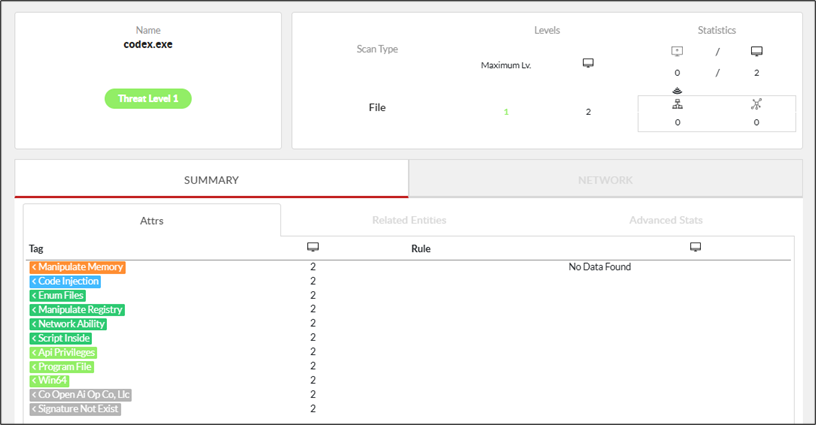
- Using Threat Hunting to identify execution characteristics associated with OpenAI.
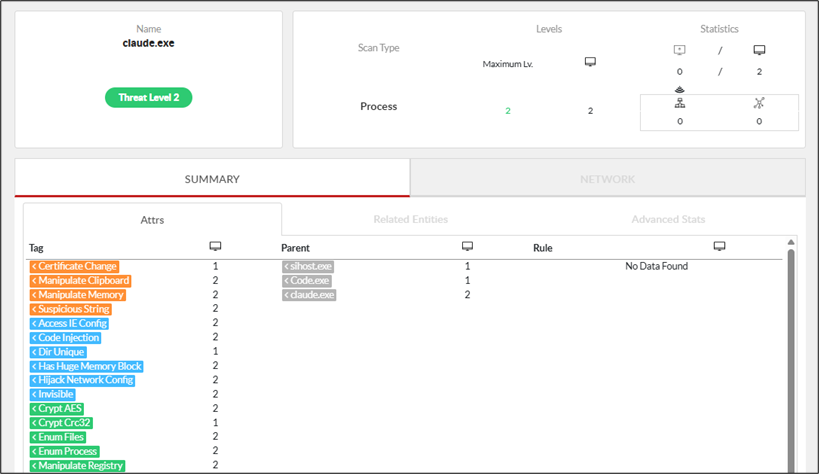
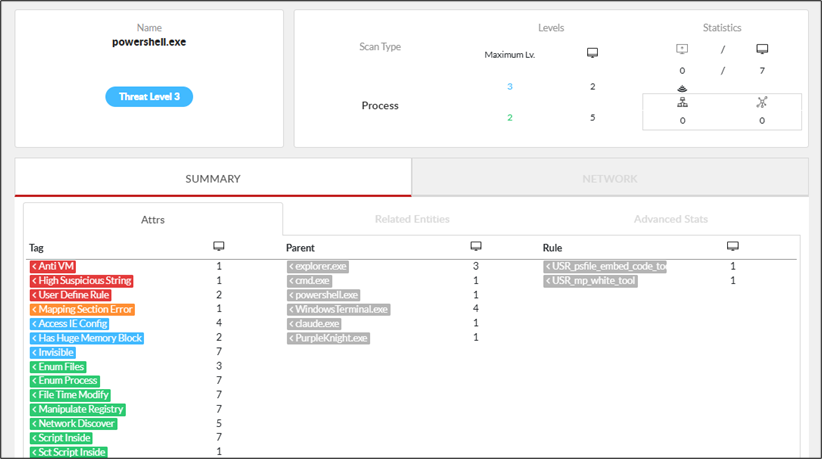
- Using Threat Hunting to identify execution characteristics associated with Claude.
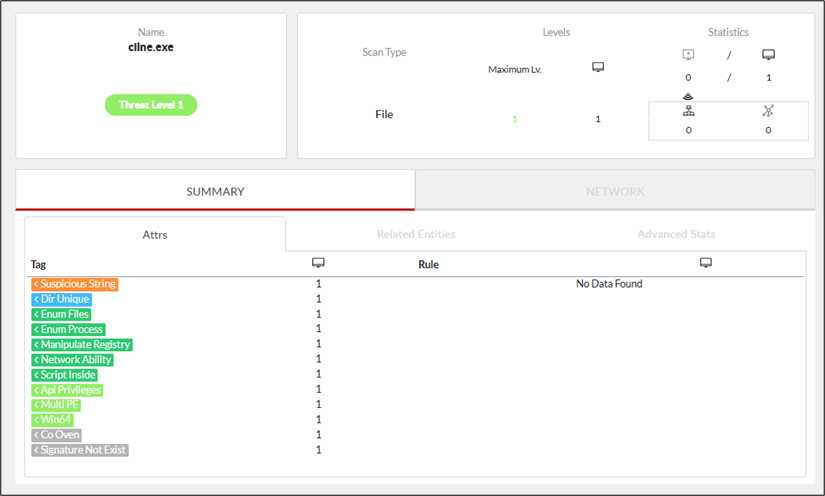
- Using Threat Hunting to identify execution characteristics associated with Cline.
2. Limitations of Investigation Mechanisms for Known AI Agents
However, the investigation methods described above are primarily effective against known AI Agents. When dealing with unauthorized “Shadow AI” deployments or highly autonomous AI Agents, normal activity can be difficult to identify unless explicitly malicious commands are executed.
- Difficulty identifying malicious intent within legitimate behavior: For unknown AI Agents, unless they execute highly obvious malware or known malicious commands, activities such as reading and writing files, executing system commands, and calling APIs appear entirely legitimate under traditional process-level monitoring. As a result, conventional mechanisms may struggle to identify suspicious behavior at an early stage.
- Lack of AI behavioral context: Traditional cybersecurity tools cannot understand the relationship between natural-language prompts and the system commands generated from them. They therefore cannot determine whether a particular command reflects the user’s actual intent or whether it is the result of an AI Agent being manipulated through Prompt Injection.
3. Comprehensive cybersecurity Governance: ThreatSonar Plus Visibility and Endpoint Defense
To address the new threats introduced by AI Agents, TeamT5 has launched ThreatSonar Plus, a comprehensive endpoint cybersecurity assessment platform designed to counter the risks of Shadow AI and uncontrolled AI Agents through the following capabilities.
1. Core Advantage: Extending Visibility from System Processes to AI Behavior
ThreatSonar Plus introduces the following key capabilities:
- Behavioral Visibility: Systematically assess the presence and activity of AI Agents on endpoints, allowing administrators to clearly understand Agent configurations and eliminate Shadow AI blind spots across the environment.
- Command-level Detection: ThreatSonar Plus focuses on understanding the actual commands executed by the AI agent. It analyzes the command patterns to identify potentially abnormal or unexpected behaviors, thus grasping the operational outline of the AI agent.
2. Core Advantage: Targeted Defense Against OWASP Top 10 Risks
ThreatSonar Plus provides targeted defensive mechanisms against key OWASP-related threats:
- Prevent Goal Hijacking and Tool Misuse: Identify whether an AI Agent is invoking unusual “skills” or tools, helping prevent malicious manipulation of Agent behavior.
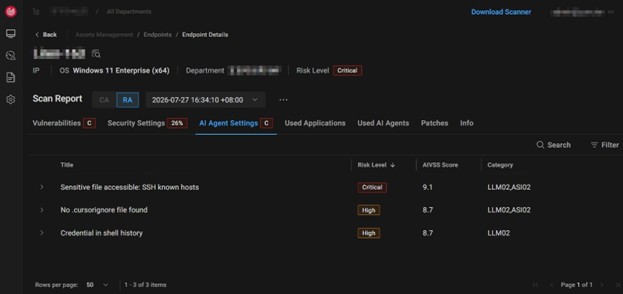
- Detect Identity Anomalies and Sensitive Data Exposure: Accurately identify where keys, credentials, and sensitive information are stored on endpoints, reducing the risk of unauthorized access by AI Agents.
- Strengthen Supply Chain and Code Execution cybersecurity: Maintain visibility into all deployed AI Agent versions and application states across the environment through comprehensive asset inventory, helping detect potential supply chain vulnerabilities or unexpected execution activity, including RCE.
- Establish Visible Compliance Metrics: Help organizations prioritize risk and assess whether AI Agents comply with international risk-management and regulatory standards.
3. Flexible Deployment
- Non-disruptive cybersecurity Assessment: ThreatSonar Plus supports both online and offline deployment. Depending on environmental requirements, enterprises can conduct one-time cybersecurity scans without disrupting daily operations, quickly gaining visibility into AI Agent deployments and associated risks.
Conclusion
AI Agents are transforming enterprise workflows from “automation” to “autonomy.” AI is no longer merely an assistive tool; it is becoming an active “system participant” with real operational capabilities.
As organizations benefit from the efficiency gains brought by AI, they must simultaneously evolve their cybercybersecurity mindset. Endpoint cybersecurity can no longer focus solely on monitoring files and processes—it must also understand and track AI behavior.
By combining the command-level detection capabilities of ThreatSonar Plus with the real-time collaborative defense capabilities of ThreatSonar Anti-Ransomware, enterprises can embrace the AI wave while maintaining strong control over their digital environments.
Want to find out how much Shadow AI or how many high-risk AI Agents may be operating within your enterprise environment?
Contact TeamT5 and let us help you implement critical AI cybersecurity assessment and compliance measures.